
Buying a pre-roll machine feels simple until you run it for a week.
Sales demos look clean. Your real floor is not. You’ve got strain swaps, humidity swings, staff turnover, compliance pressure, and a packaging team waiting on trays. That’s where machines either print money or start fights.
So let’s make this practical. These are the 10 questions that stop bad buys. I’ll tell you what to ask, what a real answer sounds like, and what to watch for.
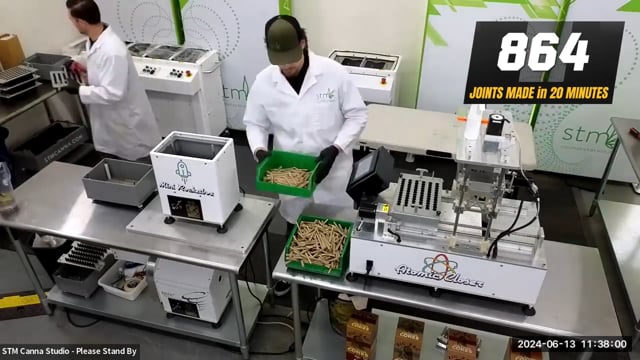
1) What is the true production rate, joints per hour and per day of the Cannabis Rolling Machine vs Pre Roll Machine?
Ask it like this:
What is your sustained rate on my format, for an 8 hour shift, including loading, clearing jams, and QC checks?
A lot of vendors quote a peak number. Peak numbers are like top speed on a car. You don’t drive that speed to work.
Answers to look for:
- A sustained hourly rate plus a realistic daily number for one shift
- A clear list of assumptions, like tray size, cone size, operator count, and target weight
- Proof from real runs, not only lab testing
Red flags:
- Rate quoted without stating cone size or weight target
- Rate that ignores loading, finishing, or weigh checks
- “It depends” with no data behind it
If you want a clean comparison, require every vendor to quote the same thing: finished, ready-to-pack units per shift, not “filled cones in ideal conditions.”
2) What is the ROI of the Cannabis Rolling Machine vs Pre Roll Machine?
Ask it like this:
Show me ROI using my labor rate, my output target, and my current reject rate.
A real ROI conversation starts with your bottleneck. Not the machine.
Most teams buy a filler, then realize the closer is the bottleneck. Or they buy speed, then discover they can’t weigh fast enough to stay compliant.
Answers to look for:
- A simple ROI model that includes labor, waste, rework, and uptime
- Payback period in months, not vague promises
- A path for scaling, like adding modules instead of replacing the whole line
Red flags:
- ROI based only on “manual cones per hour” comparisons
- No mention of rework, rejections, or downtime
- ROI that assumes perfect uptime
A quick way to sanity check any ROI claim:
If the machine saves 2 people per shift at $22 per hour loaded, that’s $352 per day on an 8 hour shift. Over 260 working days, that’s $91,520 per year. If the math being shown to you is way softer than that, push harder.
3) Cannabis Rolling Machines vs Pre Roll Machines: How easy is it to clean and change over between strains?
Ask it like this:
How long does a strain change take with a real operator, and what parts touch flower?
Changeover is where most pre-roll lines bleed time. It’s also where cross-contamination risk creeps in.
Answers to look for:
- A step list that matches GMP reality, not just “wipe it down”
- Tool-free or low-tool disassembly on the contact path
- A real changeover time, like 10 minutes, 25 minutes, 45 minutes, with what drives that number
Red flags:
- Cleaning requires deep teardown for normal strain swaps
- Hard-to-reach corners in the contact path
- No guidance on cleaning validation or SOP support
If you run 4 strains a day and each swap eats 20 minutes, that’s 80 minutes gone daily. That’s 26.6 hours per month in lost run time. Your machine didn’t fail. Your workflow did.
4) Cannabis Rolling Machines vs Pre Roll Machines: Can the machine produce consistent, quality pre-rolls?
Ask it like this:
What does consistency look like on paper, weight variance, density, and rejects?
Quality means three things on the floor:
- Weight hits target
- Burn stays stable
- The tip looks good enough to ship without touch-up
Answers to look for:
- A stated reject rate under normal production conditions
- A method for controlling fill density, not just “it fills cones”
- Real examples of QC metrics tracked over time
Red flags:
- No defined reject rate
- “Our operators just get good at it”
- Overreliance on hand finishing to hide inconsistency
This is also where a modular workflow helps. If you pair filling with a weighing step and a consistent closing step, you stop guessing and start controlling.
5) Cannabis Rolling Machines vs Pre Roll Machines: Does the machine support multiple sizes, cones, tubes, and blunts?
Ask it like this:
What sizes can it run today, and how much does a size change cost in parts and time?
Brands change formats fast. A 1 gram cone sells, then the market swings to 0.5 gram dogwalkers, then blunts take off in one state, then a multi-pack becomes the hero SKU.
Answers to look for:
- A list of supported formats and sizes
- Change parts that are easy to buy and quick to install
- A stated time to swap formats, not “pretty quick”
Red flags:
- Format changes require major mechanical work
- Vendor can’t tell you what parts you’ll need
- Size swaps void warranties or need a service tech
Even if you only run one SKU today, future-proofing matters. One format shift can pay for the flexibility by itself.
6) Does the machine require specialized flower grinding?
Ask it like this:
What grind profile does it need, and what happens if my flower runs sticky or dry?
Grinding is the silent driver of filler performance. Too fine and airflow suffers. Too chunky and you fight bridging and voids. Too sticky and everything turns into cleanup.
Answers to look for:
- A recommended grind range with examples
- Guidance for moisture and stickiness swings
- A grinder option that matches the filler’s needs, or clear compatibility rules
Red flags:
- Vendor blames all issues on your material without giving specs
- No plan for humidity swings across seasons
- You’re told to “just mill it more” as a fix
If you’re looking at STM-style tray workflows, this is why pairing a purpose-built grinder with the filler matters. One system should feed the next cleanly, or you end up babysitting every tray.
7) What is the level of automation, manual vs automatic in Cannabis Rolling Machines vs Pre Roll Machines:
Ask it like this:
How many operators does it need to hit the stated rate, and what tasks stay manual?
Automation is not a badge. It’s a staffing plan.
Some machines fill fast but need heavy manual loading. Some reduce labor but still need a person watching every cycle. Neither is “bad.” You just need the truth.
Answers to look for:
- Operator count per station, per shift
- Clear division of labor, loading, filling, weighing, closing, packing
- What the machine does when something goes wrong, like a jam or a light cone
Red flags:
- Rate shown with 3 operators, then sold as 1 operator
- No alarms, no stop logic, no easy recovery steps
- You’re expected to “keep an eye on it” all day
If your labor market is tight, automation that reduces reliance on “that one superstar operator” is real value.
8) Cannabis Rolling Machines vs Pre-Roll Machines: How does it handle infused pre-rolls?
Ask it like this:
Can it run infused material without constant jams, and what infusion methods have you validated?
Infused pre-rolls can be messy. Oils change flow. Diamonds change density. Coated flower changes friction. Even terp-heavy blends can gum up the path.
Answers to look for:
- Clear boundaries on infusion types and ratios that run well
- A process recommendation, not just “yes we can”
- A way to keep consistency, so every stick feels the same
Red flags:
- “Sure” with no examples
- No plan for cleaning after sticky batches
- Infused runs require slowing down so much that the SKU loses margin
If infused SKUs are part of your roadmap, evaluate machines with infusion in mind from day one. Retrofitting later is where budgets go to die.
9) Cannabis Rolling Machines vs PreRoll Machines: What training and technical support is provided?
Ask it like this:
What happens after install, and how fast do you respond when my line is down?
Downtime is expensive. Not in theory. In payroll and missed orders.
Answers to look for:
- Onsite training for operators and maintenance
- Remote support that includes live troubleshooting
- Spare parts strategy, what you should keep on the shelf
- Documented SOP templates or guidance
Red flags:
- Support only through email tickets
- Parts lead times that block production
- Training that covers only button pushing, not real operation
Ask for a sample support plan in writing. You’re not being difficult. You’re protecting your schedule.
10) Cannabis Rolling Machines vs Pre Roll Machines: How much space does it take up?
Ask it like this:
What is the real footprint with operator clearance, carts, trays, and maintenance access?
A machine footprint is not just the base. You need room to stage cones, stage trays, stage flower, and move product without crossing paths.
Answers to look for:
- Machine dimensions plus recommended clearance
- Utility needs, power, air, dust control
- A sample line layout with stations placed like a real room
Red flags:
- Footprint quoted without access space
- No plan for material staging
- “It fits anywhere” as the answer
If you’re planning a line, think in cells. Grinder to filler to weigh to close to pack-out, with carts moving one direction. That layout saves steps, which saves money, every single day.
Quick Answers Buyers: FAQs
What’s a good production rate for a pre roll machine?
A good rate is the sustained number you can hit for a full shift, including loading and QC. Ask for finished units per shift, not peak cycles.
What makes pre-roll machine ROI real?
Real ROI includes labor saved, waste reduced, rework reduced, and uptime. If the model ignores downtime, it’s fantasy.
What matters most for changeover?
Tool-free access to the flower contact path and a documented strain swap time with cleaning steps.
The next step: a buyer scorecard you can run in one meeting
Take every vendor call and score these 10 answers from 1 to 5.
Then ask one last question that ties it all together.
What is the slowest station in the full line, and what is your plan to remove that bottleneck without buying a second system?
If they can’t answer that, you’re not buying a production line. You’re buying a single machine and a future headache. Need help choosing? Let’s chat!