
Pre rolls drive steady sales in almost every store. They fit value packs, premium drops, and everything in between. Multi-packs, infused SKUs, and seasonal runs all need reliable output. If your line slips, your sales team feels it fast.
Hand filling used to cover the gap. It does not cover the gap now. Hourly wages climb every year. Turnover resets your pace and adds training time. Weight swings create audit stress. Missed ship dates lose shelf space.
Pre-rolled cone filling machines fix the daily grind in production. They turn loose flower into uniform, sale-ready joints at scale. They hold density, weight, and draw much tighter than hand packing. They also sit near the top of the list for capital purchases.
This pillar guide breaks down what to look for before you buy. It covers machine types, throughput math, flower prep, weight control, labor math, compliance, maintenance, and total cost. It also explains how tray-based systems run in real rooms. You will also see where the STM Canna equipment fits inside a line you can grow over time.
What Pre Rolled Cone Filling Machines Do
Pre rolled cone filling machines pack ground flower into empty cones at a set density and target weight. It replaces hand packing with a repeatable process that holds tighter tolerances. You get more joints per hour with fewer quality swings.
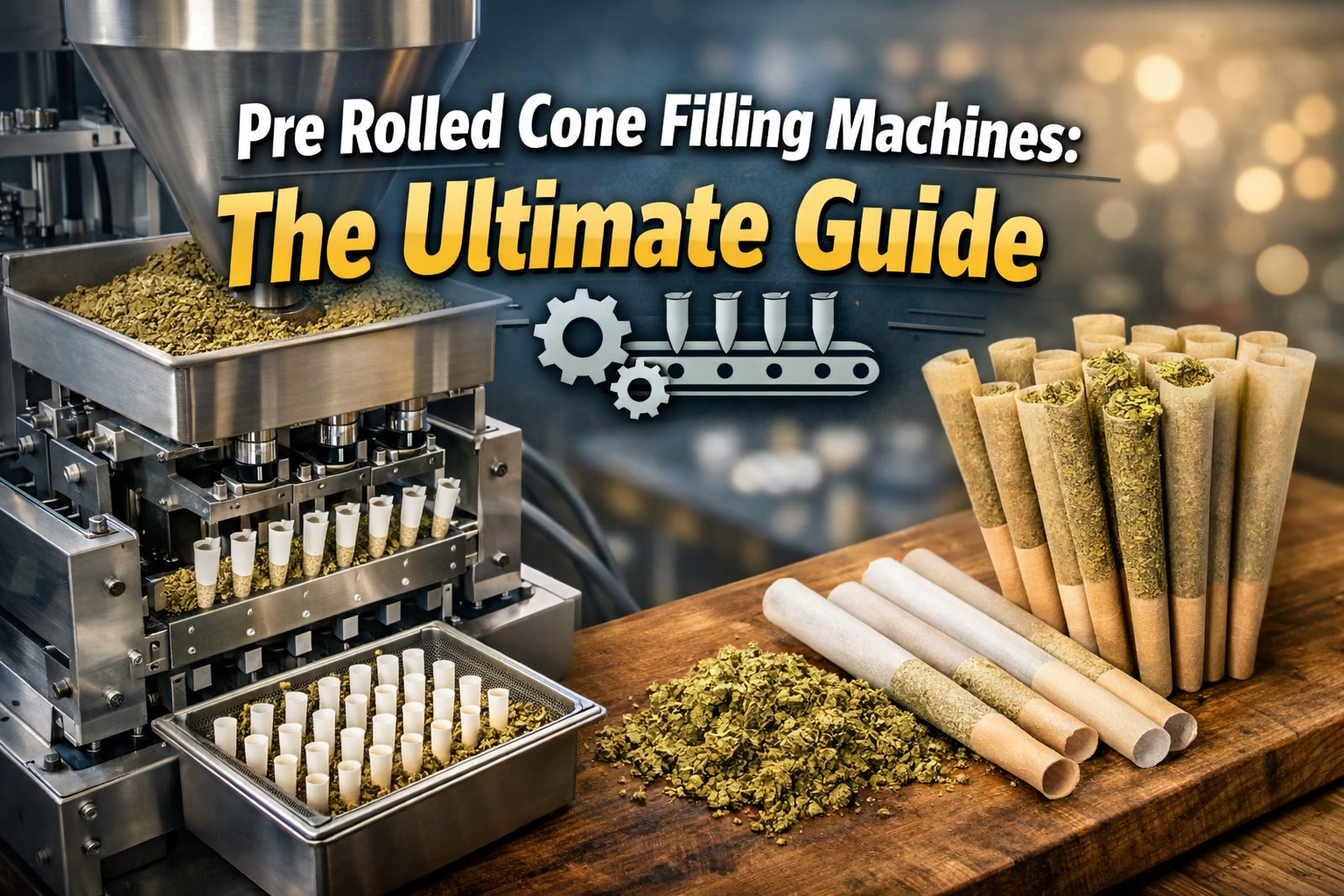
Most commercial machines use trays that hold cones upright. An operator loads empty cones into the tray, adds ground flower, and starts a vibration or settling cycle. Flower drops into each cone opening. Excess material clears off the tray surface and goes back to the hopper.
The goal stays simple. Every cone leaves the station with the same weight, the same density, and the same draw.
Pre Rolled Cone Filling Machines vs Manual Filling
Manual pre rolled cone filling breaks once pre-rolls become a main revenue line.
A strong hand packer hits 60 to 100 cones per hour on a clean setup. Output drops as the shift wears on. Weight spread grows. QC rejects climb. Rework time eats the day.
Labor scales in a straight line. Double output means double staff. Training takes days and weeks. Turnover knocks you back to square one. This model puts a hard cap on growth.
Pre rolled cone filling machines change the math. One operator running a tray-based filler pushes thousands of cones per hour with stable results. You raise output without stacking headcount.
Core Categories Of Pre Rolled Cone Filling Machines
Understanding the main machine categories helps you shop faster.
Manual Assisted Pre Rolled Cone Filling Machines
These entry-level pre rolled cone filling machines add light vibration or tamping. The operator still does most of the work. They beat pure hand filling, yet the room still feels labor-heavy.
These tools fit R and D, trial batches, or low-volume brands. If you fill 500 cones a day, they keep you moving. If you fill 5,000 cones a day, they turn into a bottleneck.
Semi Automated Tray Based Pre Rolled Cone Filling Machines
Tray-based pre rolled cone filling machines run the mid-market for a reason. Operators load trays, add flower, and start a fill cycle. The machine fills every cone on the tray at the same time.
Throughput lands anywhere from hundreds to thousands of cones per hour. Tray size, cycle time, operator flow, and flower prep drive the real number. Most growing brands sit here because speed and flexibility stay in balance.
This category also keeps your menu flexible. You can run 3 SKUs in a day and keep downtime low.
Fully Automated Industrial Joint Rolling Machines
Fully automated industrial joint rolling machines feed cones, fill, weigh, adjust, close, and eject finished joints with little human touch. They demand higher capital, higher tech skills, and steady high-volume demand.
They fit operations that run 1 SKU hard for long stretches. All-in-one systems struggle in rooms that change cone sizes and strains all day. If you change over 6 times per shift, the changeover time can erase the speed.
Modular industrial joint rolling machines solve these issues.
How Tray-Based Pre Rolled Cone Filling Machines Work
Tray-based pre rolled cone filling machines use precision plates built for set cone sizes. Each tray holds cones upright and evenly spaced. Common tray formats include 84, 169, and 300 plus cones per tray.
The operator loads cones into the tray and sets the tray in the filler. Ground flower spreads across the tray surface. Vibration settles material into each cone opening. Excess flower clears away and goes back to the hopper.
Modular tray-based industrial joint rolling machines give speed and control without locking you into rigid automation. Trays swap fast to support different cone sizes and counts. That matters when your menu changes every week.
Throughput Math That Reflects The Reality of Pre Rolled Cone Filling Machines
Advertised cones per hour rarely match what you ship.
Real throughput depends on cycle time, tray capacity, and operator rhythm. It also depends on what feeds the filler. Grinding pace, moisture control, weighing, and closing can all choke the line.
Here is the clean math example. A 169 cone tray running a 90-second cycle equals 1.5 minutes per cycle. Sixty minutes divided by 1.5 minutes equals 40 cycles per hour. Forty cycles times 169 cones equals 6,760 cones per hour.
Now look at real life. Loading and unload adds time. Flower runs out. Cones tip over. People take breaks. Closing slows the flow. Balance matters more than raw speed.
A fast filler brings zero value if grinding or closing drags behind. Your line only runs as fast as the slowest station.
Flower Preparation Sets the Ceiling For Pre Rolled Cone Filling Machines
Cone fillers amplify prep quality. They do not fix bad prep.
Cannabis Grind Size Consistency
Uniform grind lets flower flow into cones the same way every cycle. Big pieces bridge and leave voids. Fine powder packs are too tight and hurts airflow.
Run a quick check every batch. Take 10 grams after grinding. Look for the same texture every time. If you see wide swings, your weights and draws will swing too.
Industrial grinders built for pre-roll work help you hold a repeatable cut. That one step drops jams, lowers rework, and keeps your draw consistent.
Cannabis Moisture Content Control
Dry flower fills fast but rolls brittle. Wet flower clumps, sticks, and slows cycles. Both conditions raise rejects.
Most fillers run best with flower at 10 to 12 percent moisture. Brands that lock moisture see smoother flow and tighter weight control. This also cuts the number of cones you dump into rework.
Cannabis De-Stemming and Foreign Material Removal
Stems jam equipment and spike weights. Foreign material shows up in audits and complaints. Commercial lines pull stems before grinding.
Build this step into the SOP. If you process 20 pounds in a day, one missed stem pile can cost you hours. Protect the machine and protect the smoke.
Pre Rolled Cone Filling Machines, Weight Accuracy, And Regulatory Risk
Weight variance creates compliance exposure and margin loss.
Basic fillers rely on volumetric fill. You set a density and run. Advanced lines pair filling with weighing. Scales verify tray or batch weights before closing.
Weighing cuts the giveaway and flags underweights early. It also creates digital records that make audits easier. When an inspector asks for proof, you pull the log instead of pulling a team into panic mode.
Example math shows why this matters. Say each joint targets 1.00 gram. Your process gives away 0.05 grams per joint from overfill. That equals a 5 percent giveaway per unit. On 10,000 joints, that is 500 grams of flower, which is more than 1 pound.
Density Control And Consumer Experience With Pre Rolled Cone Filling Machines
A compliant weight does not always smoke well.
Density drives burn rate, ash structure, and draw resistance. Overpacked joints canoe or clog. Underpacked joints burn hot and fast. Both lead to refunds and bad reviews.
Modern pre rolled cone filling machines let you tune vibration. Operators adjust intensity and duration to match each strain. That control separates premium output from commodity runs.
Track it like a process spec. Record vibration settings for each SKU. If you run 12 strains a month, that record saves hours of trial and error.
Pre Rolled Cone Filling Machines: Labor Modeling And Headcount Reduction
Tray-based pre rolled cone filling machines replace multiple hand packers.
One operator can run tray loading, cycle control, and staging. Training takes hours, not weeks. Repetitive strain drops. Retention improves because the job feels less brutal.
Run the labor math with real wages. Example: 5 hand packers at $22 per hour equals $110 per hour. Over an 8-hour shift, that equals $880 per day. If a tray filler drops you to 1 operator for filling, you free up 4 people for grinding, closing, and packaging.
That shift also lowers risk. When 2 people call out, the line still runs.
Facility Fit And Footprint Planning For Pre Rolled Cone Filling Machines:
Production rooms set hard limits.
Tray-based pre-rolled cone filling machines sit on a bench or cart and fit most rooms. They plug into common power in many facilities. They also integrate into existing material flow without construction work.
Fully automated lines can require more utilities and more floor planning. Extra power runs and room changes add hidden cost. Those costs show up after the PO, not before.
Do the room map first. Mark the path for cones, flower, filled trays, and finished goods. If a cart crosses a walkway 30 times per shift, you built a traffic problem.
Changeovers And SKU Flexibility With Pre Rolled Cone Filling Machines
Pre-roll menus change fast.
Tray-based pre-rolled cone filling machines support quick changeovers. Operators swap trays and adjust vibration settings. Downtime stays low when you move from 1 gram cones to dogwalkers or king-size.
Measure your changeover cost. Example: 6 changeovers per shift at 5 minutes each equals 30 minutes lost. That is half an hour of labor and output gone every day.
Rigid automation struggles with variety. Long changeovers erase gains when you run new SKUs daily. If your brand lives on drops, flexibility prints money.
Infused Pre Rolls And Sticky Flower Challenges: Manual Labor vs Pre Rolled Cone Filling Machines
Infused pre-rolls bring higher margins. They also bring sticky problems.
Resin-heavy blends flow differently from dry flower. Concentrates change the density and how vibration settles material. Some systems smear, bridge, or jam under sticky loads.
Plan for infusion from day one. Test your real blend during demos. Run at least 3 trays back to back. Check weights, check draw, and check how much cleanup the machine needs.
Closing And Tip Finishing With Pre Rolled Cone Filling Machines
Filling is only one station.
Joints still need a clean top finish. You twist, tuck, pack, or crimp. Manual closing slows output and pulls labor back into the line.
Here is the simple time math. If closing takes 4 seconds per joint, one person closes 900 joints per hour. If your filler pushes 3,000 cones per hour, closing becomes the wall.
Automated pre-roll joint closers finish joints with a uniform look and feel. They also protect filled cones from rough handling. That lowers fallout before packaging.
Pre Rolled Cone Filling Machines: Cleaning, Sanitation, And Inspections
Daily cleaning protects uptime and keeps inspectors calm.
Food-grade materials wipe down faster and clean up with fewer tools. Tool-free access cuts downtime between shifts. That matters when you run 2 shifts and still need a clean room look.
Build cleaning into the schedule. A 20-minute cleanup beats a 2-hour teardown after a jam and a spill. It also keeps your blends from cross-contaminating.
Maintenance And Long Term Reliability Of Pre Rolled Cone Filling Machines
Pre rolled cone filling machines earn money only when they run.
Preventive maintenance beats peak speed. Bearings, motors, and vibration systems take a beating in daily cycles. If a vendor cannot explain service intervals, that shows up later as downtime.
Ask direct questions. What parts wear first? What spares do you keep on site? How long does a typical repair take? If parts shipping takes 5 days, your line sits for 5 days.
Support, Training, And Onboarding For Pre Rolled Cone Filling Machines
Training sets the tone for the first 30 days.
Clear docs, video support, and fast service access shorten the learning curve. Operators gain confidence faster and stop “babying” the machine. That raises output and lowers mistakes.
Support also impacts hiring. If a new operator ramps in 1 day, you can promote from within. If the ramp takes 2 weeks, you stay stuck with a few key people.
Total Cost Of Ownership Of Pre Rolled Cone Filling Machines
Sticker price is only one number.
Look at labor savings, waste, uptime, and service cost. A cheaper machine that breaks often costs more in a single year. Downtime drains margin faster than most teams expect.
Use the cost per cone over time. Example formula: total yearly cost divided by total cones shipped. Total yearly cost includes labor, rework, parts, service, and lost output from downtime. That number tells the truth.
Scaling Modular Pre Rolled Cone Filling Machines VS All-In-One Investments
Many brands scale in phases.
Modular systems let you add grinders, fillers, scales, and closers as demand grows. Each piece snaps into the same tray workflow. You grow the line without ripping up the room.
This also protects cash. You buy what you need for the next 90 days of demand. You avoid buying a line built for next year while you fight today’s labor issues.
Red Flags During Demos Of Pre Rolled Cone Filling Machines
Demos show the truth fast.
Inconsistent fills, constant jams, unclear controls, or vague throughput talk signal risk. Machines that need nonstop adjustment keep labor stuck at the machine. That defeats the point.
Run your own flower during demos. Use your real cone size. Run at least 10 trays. Count rejects, weigh samples, and watch the cleanup time.
If the vendor avoids this test, that tells you enough.
Building A Scalable STM Pre Rolled Cone Filling Machine Line
A balanced line matches prep, filling, weighing, and closing.
STM equipment follows a tray-based workflow. Ground flower feeds into RocketBox fillers. LaunchPad scales verify weights before the product moves on. Atomic Closers finish joints with a uniform top. Trays move station to station without rehandling cones.
This setup supports steady output and future growth. You add stations as volume rises. You avoid a full room redesign each time sales jump.
Final Pre Rolled Cone Filling Machines Buying Checklist
- Define target volume per shift
- Confirm SKU count and cone sizes
- Audit flower prep quality
- Map labor availability
- Measure space and power
- Plan for infused SKUs
- Review service coverage
- Calculate the cost per cone across one year
Interested To Learn More About Pre Rolled Cone Filling Machines?
Pre-roll share keeps climbing, and the margins reward control.
The right cone filling machine locks quality, cuts labor dependence, and opens room to grow. The wrong machine caps output and burns cash in rework and downtime.
Buying with full context protects the business. Machines have shaped production for years. Choose systems that keep up with demand and keep your team out of fire drills.
After reading this article, you should have almost all of the information you need to begin the process of choosing the right pre rolled cone filling machines for your needs.
But, if you still have more questions or would like to learn more, please reach out to one of our pre rolled cone filling machines experts. They will be able to answer any further questions you have.