

INFUSED PRE-ROLL EDUCATION
Why Are Hash Holes and Donut Joints So Popular?
What Cannabis Producers Should Know
September 2026 · 7-8 min read
Author: Erik Blackerby

Why are hash holes popular? Hash holes and donut joints combine flower with a concentrated core, often hash rosin, creating a distinctive premium infused pre-roll. Unlike infused pre-rolls that distribute concentrate throughout the flower or apply it externally, a hash hole places the concentrate through the center of the flower. As the pre-roll burns, the concentrate melts and can create the glowing center associated with the “hash hole” or “donut joint” name.
For producers, the interest goes beyond that signature “donut.” The format provides another way to pair flower and concentrate in a differentiated product, while introducing new production considerations as volume increases.
For cannabis brands evaluating hash holes, the important questions are not only why consumers are interested in them, but what donut joints can add to a product lineup, whether they fit the target market and, most importantly, whether the operation can produce them consistently.
Hash holes also allow brands to pair particular flower and concentrate combinations within a single product. Traditional hash holes are closely associated with hash rosin, although internally infused pre-rolls can also be produced with other compatible cannabis concentrates depending on the product and manufacturing method.
For producers, those characteristics create opportunities for product differentiation beyond a traditional flower pre-roll.
If you’re new to the category, start with our guide to What Is a Hash Hole? Hash Hole & Donut Joints Explained, including how hash holes are constructed, common terminology and how they differ from other infused pre-rolls.
Why Are Cannabis Producers Interested in Hash Holes?

Cannabis producers already have numerous ways to build a pre-roll lineup, including traditional flower pre-rolls, multi-packs and different types of infused products.
Hash holes provide another format and another potential SKU, one that is often positioned at the premium end of an infused pre-roll lineup.
A producer can build a product around a particular flower, concentrate, dose and pre-roll size, creating combinations that fit the positioning of the brand.
That can be particularly relevant to vertically integrated producers that already manufacture both flower and concentrates. Instead of treating those products as separate categories, an internally infused pre-roll provides another way to combine them into a finished SKU.
For other producers, the opportunity may simply be expanding an existing infused pre-roll lineup with a format that looks and functions differently from a conventional pre-roll.
What Makes Hash Holes Different From Other Infused Pre-Rolls?
A hash hole is a type of infused pre-roll, but not every infused pre-roll is a hash hole.
The defining characteristic is an internal concentrate core surrounded by flower.
Other infused pre-rolls can incorporate concentrates differently. Depending on the product, concentrate may be blended into the flower, applied to the outside of the pre-roll with kief dusting, or incorporated using another infusion method.
For producers, that distinction matters because creating an internal core introduces different manufacturing considerations, including concentrate dose, placement and material handling.
We cover the construction and terminology in more detail in What Is a Hash Hole? This article focuses on why producers are evaluating the format and what happens when it moves into commercial production.

Why Do Hash Holes Support Premium Product Positioning?
Hash holes are commonly positioned as premium infused pre-rolls because the format combines flower and concentrate in a single product and often uses higher-value inputs such as hash rosin. Depending on the formulation, that combination can also produce a high-potency finished product.
In markets including Washington, New Jersey, New York, Nevada and Michigan, we have seen hash holes positioned at premium retail price points compared with more conventional pre-roll formats.
That does not mean every hash hole automatically commands a particular retail price.
Retail pricing depends on the amount and quality of flower, concentrate type and quantity, product size, brand, retailer, state market, taxes, promotions and local competition.
For producers, the more useful takeaway is that the format provides room to create a differentiated product around the inputs being used.
A brand might pair a particular cultivar with a complementary concentrate, create different flower-to-concentrate ratios, or develop different weights and product formats.
The finished product, not simply the “hash hole” name, ultimately determines how it can be positioned.
Why Do Hash Holes Stand Out on a Retail Menu?
Pre-roll menus can contain many products that appear similar at first glance.
Hash holes provide retailers and brands with another recognizable product format.
The concentrate core gives the product a characteristic construction, while the combination of flower and concentrate gives producers additional ways to differentiate the inputs, formulation and finished product.
Hash holes can also be more difficult and labor-intensive to produce than conventional pre-rolls, particularly when made manually. That can make it more difficult for producers to increase output quickly as demand grows.
Cannabis brands and equipment manufacturers continue to introduce hash-hole products and production capabilities, showing ongoing commercial interest in the format.
That does not tell us how large the category will ultimately become. It does show that producers are actively developing products and manufacturing methods around it.
What Should Producers Consider Before Adding a Hash-Hole SKU?
Popularity alone is not a reason to introduce another product.
Before adding hash holes or donut joints to a lineup, producers should first define the product they actually want to make.
Flower and Concentrate
What flower will be used, and what concentrate will be paired with it?
Traditional hash holes are strongly associated with hash and rosin, but commercial internally infused products can use different compatible concentrates depending on the production method.
The concentrate also has handling characteristics that need to be considered during production. It takes a certain level of expertise to understand how different concentrates behave and what processing temperatures, doses and production methods work best for the intended product.
Concentrate Dose
How much concentrate should each finished pre-roll contain?
The intended dose affects the formulation, product economics and production process.
Pre-Roll Format
What size will the finished product be?
Flower weight, pre-roll dimensions, concentrate quantity and overall construction should be established before choosing a production process.
Production Volume
How many units does the operation realistically expect to produce?
A limited-release product made in small batches creates very different manufacturing requirements from a SKU intended for continuous commercial production.
Labor
How many hands-on steps are required to produce each finished unit?
Manual production can make sense at smaller volumes. As output increases, the amount of operator time required for each product becomes increasingly important.
Market Fit
Does the product make sense for the customers the brand actually serves?
Producers should look at their own retail partners, customer demand, competitive products, concentrate availability, pricing and production economics rather than assuming that a format belongs in the lineup simply because it is receiving attention elsewhere.
How Can Producers Position Their Hash Holes?
In markets where hash holes are in demand, a differentiated hash-hole SKU can potentially do more than add another item to a product catalog.
An in-demand product can give a producer another reason to start a conversation with dispensary buyers. Once that relationship is established, there may also be an opportunity to introduce buyers to other products in the brand’s portfolio.
Producers can also differentiate the product itself. That could mean pairing a particular cultivar with a complementary concentrate, creating a limited release, developing an exclusive SKU for a retailer, or offering a product that is not widely available in a particular area or region.
This can be especially useful in competitive markets where brands are looking for ways to give retailers a reason to consider another SKU.
The opportunity will vary by market, so producers should validate demand with their retail partners and customers. Where that demand exists, a hash hole can become both a differentiated SKU and an introduction to the rest of the brand’s portfolio.
Start With the Product, Not the Machine
One of the most important decisions happens before a producer evaluates equipment.
Define the product first.
A useful sequence is:
Product format → flower → concentrate → dose → pre-roll size → expected volume → production workflow → equipment
Starting with equipment reverses that process.
A machine may be capable of producing an internally infused pre-roll, but that does not automatically mean it is appropriate for the concentrate, dose, format or production volume a particular brand needs.
The production method should support the product rather than forcing the product to fit the equipment.
What Changes When Hash Holes Move From Craft to Commercial Production?
Making a small number of hash holes and manufacturing them repeatedly at commercial volume are different production challenges.
At small volume, an experienced operator can individually prepare and position concentrate and make adjustments from one pre-roll to another.
As output increases, the process needs to become more repeatable.
Several variables become increasingly important:
- Dose: Can the intended amount of concentrate be repeated across the production run?
- Placement: Can the concentrate be positioned consistently according to the intended product design
- Temperature: Can the material be maintained within the conditions required by the production process
- Material behavior: Does the concentrate behave consistently during processing?
- Labor: How much operator time is required for each finished product?
- Throughput: Can the complete production line support the required volume?
At that point, the question is no longer simply whether the operation can make a good hash hole.
The question becomes whether it can repeat the process at the required volume.
Does Every Hash-Hole Producer Need Automation?
No. Hand production can remain appropriate for craft batches, product development, limited releases and producers that are still evaluating demand.
Automation addresses a different production problem.
It becomes worth evaluating when increasing volume creates constraints around labor, concentrate dosing, placement, process control or throughput.
There is no universal production number at which every producer should automate. The economics depend on the product, labor requirements, production goals and the rest of the manufacturing workflow.
Automation should solve an existing production requirement rather than simply add equipment to a facility.
What Should Producers Look at Before Scaling Hash-Hole Production?
Before increasing production, producers should look at the entire process rather than focusing only on how quickly concentrate can be added to a pre-roll.
Questions worth answering include:
- What concentrate are we using?
- What is the target concentrate dose?
- What pre-roll sizes are we producing?
- How many finished units do we need per shift?
- How much operator time does the current process require?
- Can we maintain the intended dose and placement throughout a production run?
- Where is the current production bottleneck?
- How will infusion fit with filling, closing and packaging?
- Are we producing one recipe or multiple infused SKUs?
- Is current demand recurring enough to justify changing the production process?
Those answers establish whether the next step should be refining the manual process, changing the workflow or evaluating automation.
Can Commercial Hash-Hole Production Be Automated?
Yes. Portions of hash-hole and internally infused pre-roll production can be automated, although different systems approach the process differently.
Some commercial methods stage flower so that an operator can place a prepared concentrate core before completing the pre-roll. Other systems automate the infusion step by delivering a controlled amount of compatible concentrate into filled pre-rolls.
The right approach depends on the finished product a producer wants to make.
STM Canna’s Astro Infuser 2.0 uses automated internal infusion. The system injects 12 filled pre-rolls simultaneously with compatible concentrate and provides programmable control over dose, temperature and infusion parameters.
For producers considering automation, the more important question is not simply which machine is fastest.
It is which production method fits the concentrate, product format, desired volume and surrounding workflow.
We’ll explore those production methods, workflow considerations and the transition from handmade to automated infusion in our next guide on scaling commercial hash-hole production.

Hash Hole and Donut Joint Popularity: Quick Answers
Why are hash holes popular?
Hash holes combine flower and concentrate in a distinctive infused pre-roll format. The internal concentrate core creates a recognizable product and allows brands to develop different combinations of flower, concentrate, dose and product size.
Why are donut joints popular?
Donut joint is another common name for the same general product format. The name comes from the circular opening that can appear as the flower burns around the concentrate core.
Why are cannabis producers adding hash holes?
Hash holes provide another way to expand an infused pre-roll lineup, combine flower and concentrate in a single SKU and differentiate a product from a traditional flower pre-roll.
Are hash holes considered premium pre-rolls?
Hash holes are commonly positioned as premium infused pre-rolls, particularly when made with premium flower and concentrates such as hash rosin. Actual retail positioning and pricing depend on the product, brand and market.
Are hash holes difficult to produce commercially?
Commercial production introduces additional considerations around concentrate dosing, core placement, material handling, temperature, labor and throughput. These factors become increasingly important as production volume increases.
Can hash-hole production be automated?
Yes. Different commercial systems automate different parts of the production process. Automated internal infusion is one approach for delivering compatible concentrate into filled pre-rolls.
Is a Hash-Hole Product Right for Your Pre-Roll Line?
Hash holes and donut joints give cannabis producers another way to combine flower and concentrate in a differentiated infused pre-roll.
But a recognizable format does not automatically make it the right product for every operation.
The decision should start with the customer, product formulation, concentrate, expected volume and production economics. From there, producers can determine whether hand production remains appropriate or whether a more repeatable commercial process is needed.
If you are still learning about the format itself, read What Is a Hash Hole? Hash Hole & Donut Joints Explained.
If you’re already evaluating commercial production, explore the Astro Infuser 2.0 to see how STM Canna approaches automated internal pre-roll infusion.
Or talk with an STM Canna pre-roll automation expert about your concentrate, desired product and production goals.
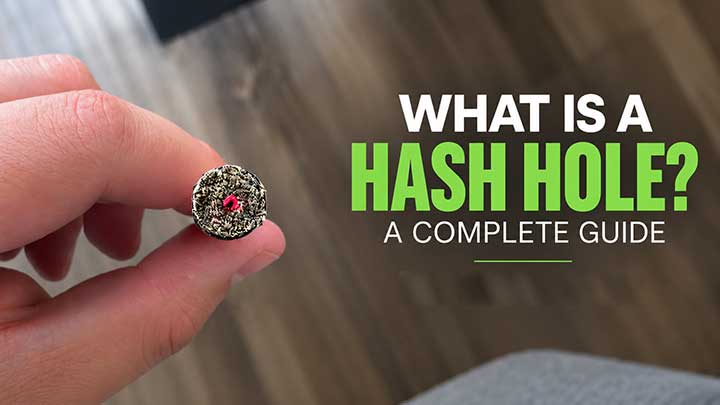
If you’re new to the category, start with our guide to What Is a Hash Hole? Hash Hole & Donut Joints Explained, including how hash holes are constructed, common terminology and how they differ from other infused pre-rolls.